

Unplugged
We spend too much time plugged into the noise — scrolling, reacting, and absorbing a world of distractions. But the real moments, the ones that matter, happen when we put our devices away.

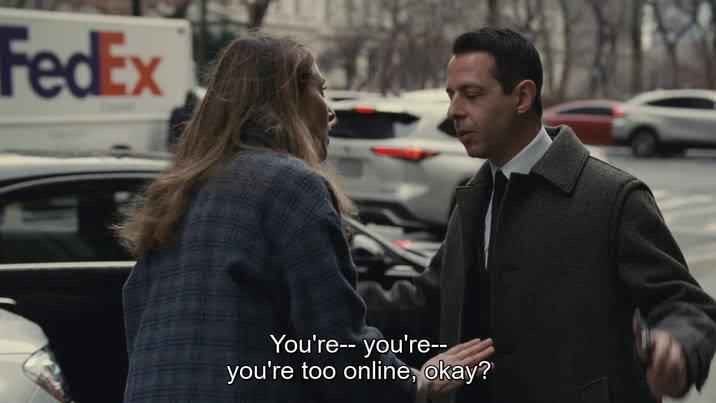
There’s a great scene in HBO’s hit series Succession when Jeremy Strong’s character snaps at his wife, “You’re too online. You’ve lost context.”
He’s insulting her, but indicting all of us. We are too online, and we have lost context.
Too many of us are, as Oliver Burkeman says, “living inside the news.” We wake up scrolling and carry the latest outrage in our pockets, letting someone else’s agenda hijack our focus for profit.
One post leads to another, each one more urgent, more infuriating, more designed to pull us in. And suddenly, we’re not just consuming the news, we’re being consumed by the news.
Everywhere I go, I see people trying to make sense of uncertainty by anchoring themselves to the news cycle, refreshing for updates that don’t change a thing. I’ve done it too. And every time, it leaves me feeling the same: distracted, anxious, and oddly powerless.
Because here’s the thing: drowning in international headlines doesn’t make us better informed. If anything, it makes us less effective in our real lives.
As Adam Greenfield, author of Radical Technologies, puts it, this kind of constant exposure leaves us in a “low-grade state of panic and loss of control” — so normal, that we barely notice it anymore.
It’s not an accident. We’re in an attentional arms race, and the news doesn’t just want our interest — it wants our attention, our reactions, our time.
And in that battle, the loudest, most extreme, most sensational stories always win. As Tim Wu writes, “attention will almost invariably gravitate to the more garish, lurid, outrageous alternative.”
The result? The most inflammatory voices dominate. And the more we engage, the more we feed the machine. And the more we miss in our own lives.
So how do we break the cycle? How do we stay informed without losing ourselves?
Reconnecting with the Real World
A few weeks ago, on the last day of our vacation, my wife and I went to the beach. No agenda, no scrolling, just the sun warming our faces, the waves rolling in, and the quiet hum of conversation.
We sat there for two hours, letting the world happen around us. And afterward, I felt lighter, like my mind had been rinsed clean by the surf.
I’ve been chasing that feeling ever since by trying to focus on real things without distraction. Having conversations without compulsively checking my phone, taking time to read fiction in the early morning, and focusing on my breath at the gym instead of listening to music.
These moments — unfiltered and undistracted — feel real in a way that scrolling never does. They remind me that my life isn’t happening inside an app.
It’s here, in the weight of a barbell, the crunch of my feet on the trail, and in authentic human connection.
And yet, I still need reminders.
Last Saturday, my wife and son were making cinnamon chocolate muffins in the kitchen.
I was just a few feet away but got lost in my phone, my head a million miles from the moment.
My son looked up. “Hey, why don’t you put that down and join us.”
And just like that, I snapped back to reality.
I set my phone aside and made myself useful, measuring out sour cream with a precision that would make Gordon Ramsey proud. It was the best moment of my week.
What’s sad is that I could have missed the moment — I’ve probably missed many just like it — even though I was right there.
The Takeaway
The world isn’t inside our screens. It’s here all the time, waiting for us if we’ll only pay attention and focus on where our feet are.
The trick isn’t to never go online. It’s to remember that real life — the only one that matters — is happening right in front of us if we’ll only take notice.
Best Thing Ever Said About: Unplugging
"A wealth of information creates a poverty of attention." — Herbert Simon
Worth Reading
My Father’s House, by Joseph O’Connor.
Another great way to reclaim your attention — and your sense of presence — is by reading great fiction.
Unlike the endless scroll of news and social media, a well-crafted novel requires focus, imagination, and patience. And the payoff? Research shows reading fiction improves attention span, strengthens empathy, and gives our minds a deep, immersive break.
My Father’s House is a rare literary spy thriller. Set in Nazi-occupied Rome, it follows an Irish priest, Hugh O’Flaherty, who runs a clandestine escape network, smuggling people out from under the Gestapo’s nose. It’s tense, atmospheric, and beautifully written.
It’s the kind of book that pulls you in completely, forcing you to slow down, pay attention, and live inside another world for a while.
And that’s the point.
Check out my updated website at www.wellmadecreative.com. It’s been fun to help clients large and small create and execute brand and content strategies.
Let me know what you think at bstump@wellmadecreative.com.
Well said. Amen :)